๐ŸŸ One, Two, Three, Four, Five: Once I Caught a Fish Alive ๐ŸŸ

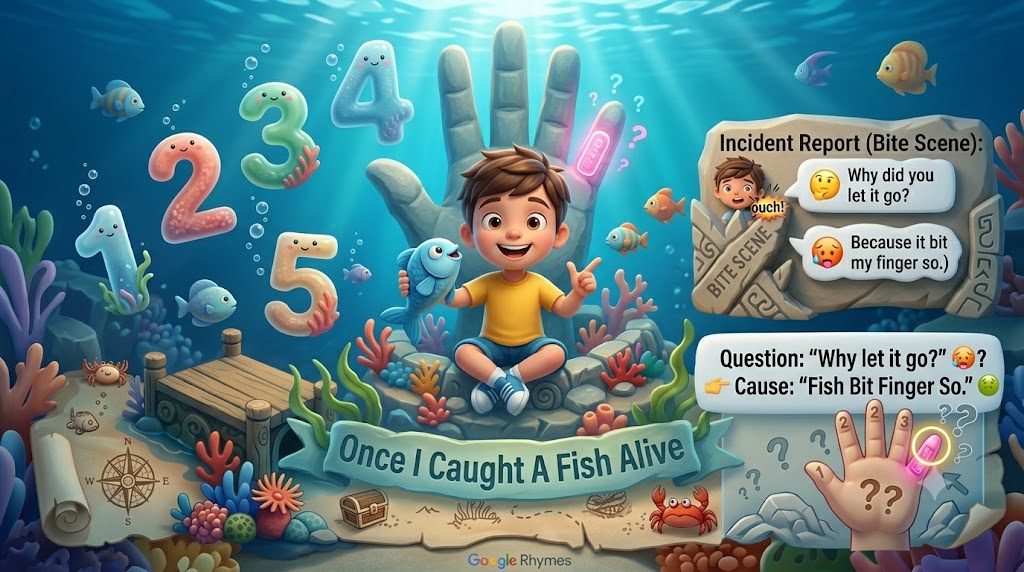
One, two, three, four, five, (1๏ธโƒฃ, 2๏ธโƒฃ, 3๏ธโƒฃ, 4๏ธโƒฃ, 5๏ธโƒฃ,),
Once I caught a fish alive, ๐ŸŸ

Six, seven, eight, nine, ten (6๏ธโƒฃ, 7๏ธโƒฃ, 8๏ธโƒฃ, 9๏ธโƒฃ, ๐Ÿ”Ÿ)
Then I let it go again. ๐ŸŒŠ

Why did you let it go? ๐Ÿค”โ“
Because it bit my finger so. ๐Ÿฅต

Which finger did it bite?๐Ÿ–๏ธ
This little finger on my right. ๐Ÿ‘‰๐Ÿ‘ถ

Does your toddler count till 10 but still get confused when numbers aren’t in order โ€” or get scared the moment something “bites” or “hurts”? This is exactly where “One, Two, Three, Four, Five” does double duty. It’s one of the oldest counting rhymes in the English language, and it quietly teaches children two things at once: number sequence, and that it’s okay to let go of something gently instead of reacting with anger when it hurts you.

Why Do Kids Love the “Fish Bit My Finger” Line So Much?

Toddlers between 2-6 years are in the stage where cause-and-effect makes the world make sense to them โ€” “the fish bit me, so I let it go” is a complete little story with a beginning, a problem, and a resolution, which is why children remember it faster than a plain counting list like “1, 2, 3, 4, 5, 6, 7, 8, 9, 10.”

The question-and-answer pattern in the second half (“Why did you let it go? / Because it bit my finger so.”) also mirrors real conversation. Children naturally start using this call-and-response pattern in their own pretend play, which builds early conversational turn-taking โ€” a skill speech therapists actively look for in toddlers.

A few months ago, while testing some new learning activities, my young nephew kept getting stuck on number sequencing. He could count to 10 like a machine, but the moment I asked him what comes after 6 without starting from 1, he would freeze.

I sat down with him and started singing “One, Two, Three, Four, Five…” while doing the finger actions. When we reached the bite scene, I gently pinched his little pinky finger and went “Ouch!” He burst into laughter. Within just three rounds of singing it together, he wasn’t just remembering the sequence โ€” he was eagerly waiting for number 6 so he could throw his hands up and say “Then I let it go again!”

That’s the power of a story-driven rhyme; it turns a boring math lesson into a playful memory.
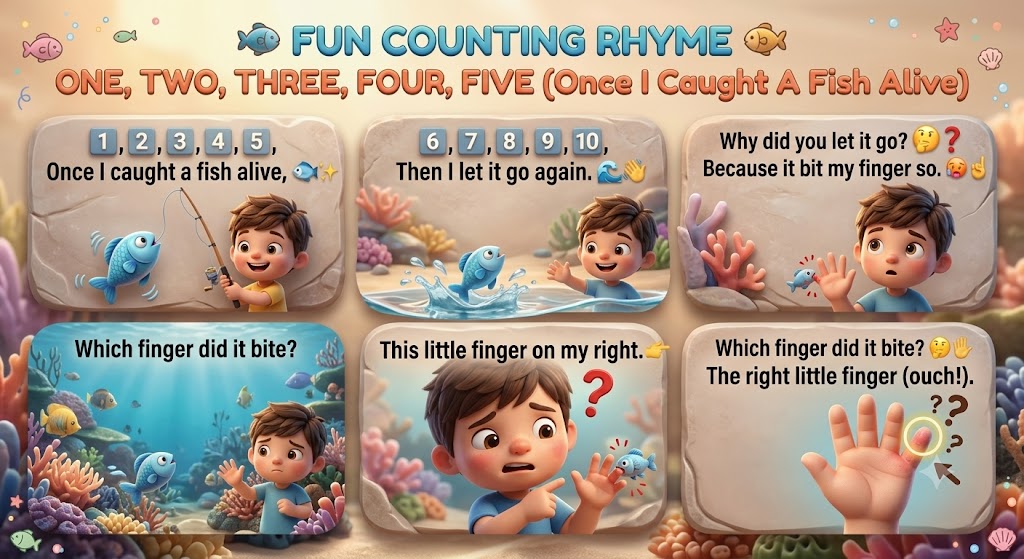
One, Two, Three, Four, Five rhyme

๐ŸŒŸ Moral of the Rhyme โ€“ ๐ŸŽต 'One, Two, Three, Four, Five'

This rhyme teaches children that even when something small hurts us, the right response is to let it go gently โ€” not to hurt it back. Alongside empathy for animals, it builds number sequence from 1 to 10 in a playful, memorable way.

  • Age Group: 2 to 5 years
  • Theme: Counting & Numbers, Kindness to Animals, Cause & Effect
  • Skills Focused:
    โœ… Number recognition (1โ€“10)
    โœ… Fine motor skills (finger actions)
    โœ… Vocabulary building
    โœ… Empathy and cause-effect understanding

  • Available Formats:
    ๐ŸŽต Audio (MP3)
    ๐Ÿ“„ Printable PDF
    ๐ŸŽฌ Animated Video
  • Learning Style: Sing-along with actions
  • Rhyme Duration: Approx. 3.35 minutes

How to Act Out This Rhyme (Finger Actions)

LineAction
“One, two, three, four, five”Count up on fingers, one at a time
“Once I caught a fish alive”Press both palms together and wiggle like a swimming fish
“Six, seven, eight, nine, ten”Continue counting on the other hand
“Then I let it go again”Open palms and throw hands up, releasing the “fish”
“Why did you let it go?”Shrug shoulders
“Because it bit my finger so”Pretend-bite your own pinky finger
“Which finger did it bite?”Shrug shoulders again
“This little finger on my right”Wiggle the right pinky finger

Related Posts

Questions and Answers about the 'One, Two, Three, Four, Five' Poem for Toddlers

Q1. What does this rhyme teach toddlers?

Ans. It teaches children to count from 1 to 10 in sequence, and shows them that when something hurts you, you can respond by letting go calmly instead of reacting with anger.

Q2. Why did the child let the fish go in the rhyme?

Ans. Because the fish bit their finger. The rhyme uses this small “ouch” moment to teach kids that living things โ€” even small ones โ€” deserve to be set free rather than hurt back.

Q3. Is this rhyme good for teaching numbers 1 to 10?

Ans. Yes. It’s one of the most effective early counting rhymes because the numbers appear in a story instead of a plain list, which helps toddlers remember the sequence faster.

Q4. Where does this rhyme come from?

Ans. It first appeared in print in Mother Goose’s Melody in 1765 โ€” but the original version was about catching a hare, not a fish. American folklorist Henry Bolton reworked it into the fish version in the 1880s, and that’s the version children sing worldwide today.

Dowload Clap Your Hands [Eng/Hindi]

Picture of Tanu Bhardwaj

Tanu Bhardwaj

Tanu Bhardwaj is the creator of KiddyRhymes.com, where she shares fun nursery rhymes and learning activities for young children. Her passion is making early education joyful and inspiring little minds every day.

Leave a Comment

Leave a Comment